
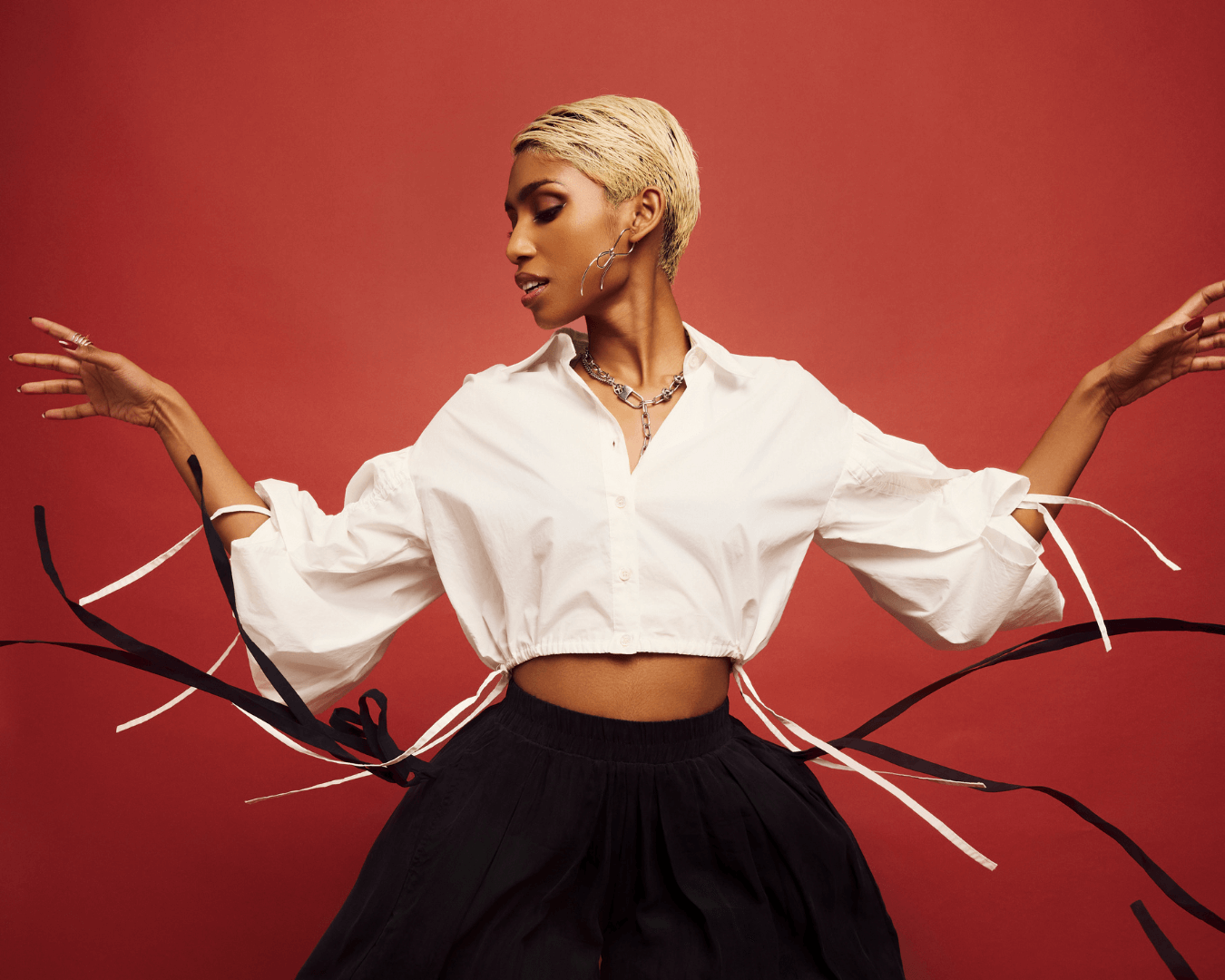
Shamita Siva has been in the entertaining game for the better part of two decades. In that time, they’ve worked on more than two dozen theatrical and screen productions (including Lee Galea’s Single, Out, Siva’s own Twin Flame, and a Melbourne stage production of Nosferatu), proving that they can do it all; they can act, they can dance, and they can write.
Despite their versatility, it’s taken Siva almost 10 years to reach their first ‘big break’ (as Officer Sarika Ray on the American TV series Good Cop/Bad Cop). And according to them, the reason why is clear—Australia’s entertainment industry is stuck in its ways.
“When I first got started (in my early 20s), the biggest challenge for me was that Australia wanted to see themselves in media,” Siva tells Not Safe For Queers. “So big network execs and producers ask themselves, ‘what’s the majority?’ and so it probably goes cis white men, then women, and then, you know, they might trickle down from there.”
Over the years, this has led to Siva—a queer, Malaysian Indian Australian—being consistently overlooked for the majority of roles. “When it came to the ‘Average Joe’ kind of role, or if they weren’t needing someone who looked ‘unique’, I would just totally get passed over because I didn’t have the right energy, or the right look; I wasn’t the beachy blonde girl next door,” they say.
“And, I mean, I hate to say it, but it’s still very much the case today. In Australian media, it’s very rare that someone who doesn’t look a certain way is seen for a leading role.”
Yet, it’s not just the way an actor looks that can affect their chances at landing a role. Their identity plays a big part, too. Even within the South Asian community, Siva’s queerness presents its own hurdle.
“There have been one or two instances where they’re looking for a brown, or a Sri Lankan or a Desi-appearing human, but they want that stereotype. They want someone who has long, dark hair, and is very heteronormative,” they explain.
“And the thing is, I’m more than happy to do that for a role if the role requires it. But sometimes, if you present a certain way, you won’t even get looked at if you don’t hit the casting director’s initial imaging of that character.”
Of course, there have been improvements in recent years, but the industry is still nowhere near the pinnacle of acceptance and inclusion.
“I do feel like there has been some change. It did get a lot better. And that’s great. It’s not going to be something that happens overnight. But suddenly, with the rise of fascism, with more loud conservative attitudes, it does seem that we are kind of slipping backwards again,” Siva admits.
Moving forward, Siva really doesn’t want to give up on the industry that they’ve invested so much time and effort in. So, they’ve decided to take matters into their own hands, launching their own production company, Shadow Goose Entertainment.
“My passion would be doing more work locally, because I believe in our industry so much. And that’s why I’ve set up my own production company with a focus on queer representation and Indigenous representation,” they say.
“Because I think at the end of the day, if you want something done, you’ve gotta do it yourself.”